

Have you ever wanted to be a firefighter? Or at least interested in EMT or having your CPR card? If you do want to be a firefighter, have you even considered whether to be a city firefighter or a wildland firefighter? The DHS firefighters program teaches students all of these things and more. It takes a lot of work and dedication, but it teaches you the experience of what it’s like to be a firefighter, and you get a lot of useful stuff out of it. Mr. Lopez, who runs the program, and Mel Ledesma, a student currently taking it, both explain how it works and what it’s about.
“So this program is a urban rural firefighter class. So these students, the first semester, will be going over the pre-EMT class, and what that does is prepare them if they decide to take this course, a college course, an EMT in college,” Mr. Lopez says. “This is gonna give them a heads up on what’s expected of them, so they’ll have an advantage. They’re gonna be able to take vital signs, c spine, mobilize all the stuff that EMT, that works on an ambulance, does, and the second semester we start the fire academy, so that’ll help, actually help prepare them if they decide to take the Fresno City fire academy.”
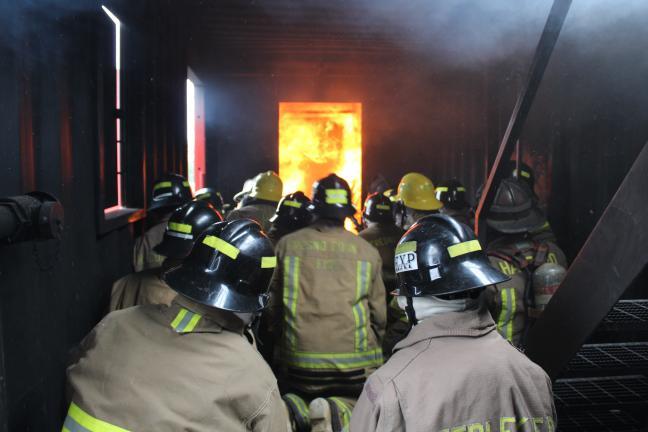
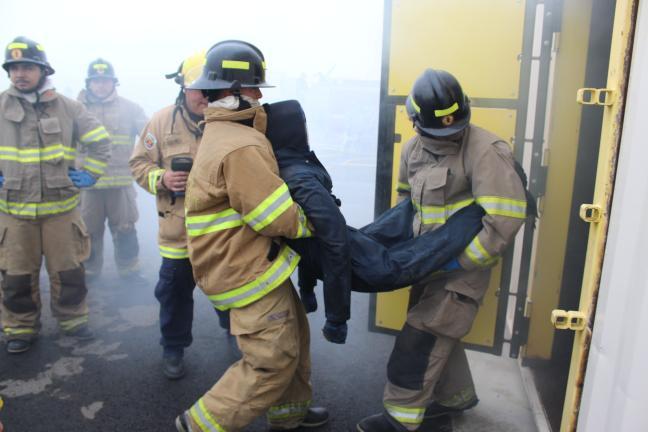
The firefighter program does a lot of interesting things that are as close to what real firefighters do as it can get. “Any life-saving medical stuff is what they’re going to learn, and as far as firefighting, they’re learning how to don and off emergency gear. Breathing apparatus. We do stuff like search and rescue. We do latter’s,” Mr. Lopez says. “They’re gonna be able to operate the jaws of life. We do forcible entry where they’re learning how to use specialized tools to break through doors. We also have a confidence course where they’re put in a trailer that has several levels, and it’s completely pitch black, and they have to go in and find their way out. So anything that a firefighter does besides actively go in a burning house is what the students here at Dinuba get.”
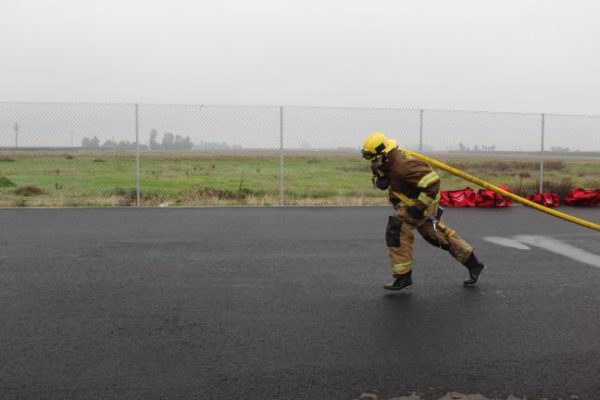
Mr. Lopez, who formerly worked at the station for over 30 years and retired last year, makes sure to treat the students as if they were rookie firefighters, making the experience as real as possible to give them an idea of what the pathway is like and what to expect. They learn how to pull the hose, to don and doff (to take on and off their gear), and read apparatus. There are three Saturdays a semester that they’re required to attend, which takes place at the facility by the water tower.
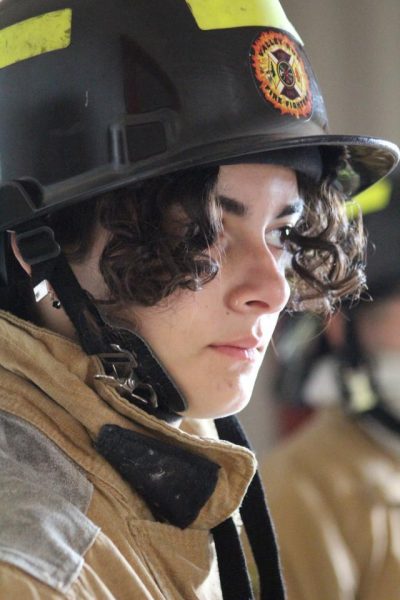
Mel Ledesma, who is a student currently taking the program, feels this program deserves more recognition and wants to encourage more people to join. “Yeah, I would actually. That’s why we’re interviewing right now because I really wanted to get exposure for our class cuz you know, we don’t really do career days, so this is like one of the only things we can do to get students to join.” She describes what it’s like to be in this class. “This program is pretty fun if, you know, you’re someone who really wants to like work, I guess. Like you really want to get like a hands-on experience. I know some classes don’t get that, but Dinuba’s class is pretty good with that, so yeah.”
When asked about the overall training, she said, “Well, overall we kind of just go through– there are two courses, so there’s an EMT course, which is medical, and a firefighting course, which is obviously hands-on, go outside and fight fires. For EMT, we also do hands-on. We do a lot of, we do CPR training. We learn, we do slides, and we learn a lot of the medical stuff, and what we have to do, you know, for you know calls and all that, and for firefighting, that’s where we kind of just go outside. We pull tires, yeah, we pull tires, we do obstacles, we, you know, we learn to work the hose system, and you know, through all that, we also get to wear gear, you know, just to fit the simulation that we’re in a real-like situation.”
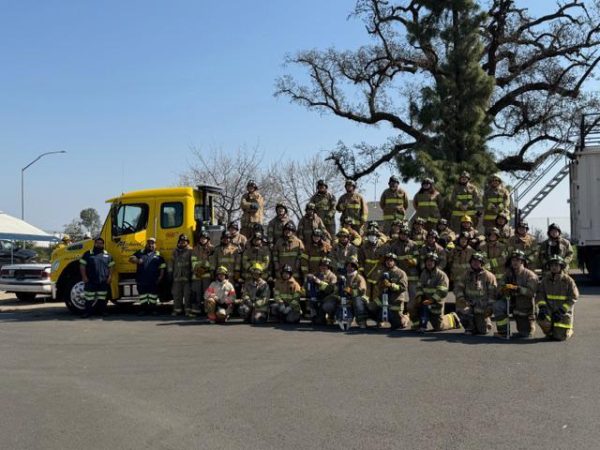
There is only one requirement for this class: you have to be at least a junior. “To take urban, you need to be a junior,” Mr. Lopez explains. “You could be a senior, but juniors are what we want in this class because once you become a senior, you are eligible to take the Wildland Firefighting class. That’s out of Reedley College for seniors only, so take the urban first and then you take the wildland, and then students can see if they like city firefighting or wildland firefighting, and that can help their career path.”
So, for anyone wanting to be a firefighter or even interested in the course, you should definitely check out this program. It sounds fun and perfect to learn what it’s like to be a firefighter. It’s clearly a program that deserves more attention than it gets and, thanks to Mel, hopefully it will.
![The new leadership at Dinuba Intermediate School (from left to right): Jessica Juarez (soon to be Jessica Chavez) - Learning Director, Rosa Carreon - Counselor, Hilda Osorio - Counselor, Gloria Valencia - Principal, and Micah Hiett - Learning Director. [Photo courtesy of Gloria Valencia]](https://emperorgrapevine.com/wp-content/uploads/2026/05/682710295_18557787079066828_5882969838312812831_n-900x1200.jpg)


