
![The new leadership at Dinuba Intermediate School (from left to right): Jessica Juarez (soon to be Jessica Chavez) - Learning Director, Rosa Carreon - Counselor, Hilda Osorio - Counselor, Gloria Valencia - Principal, and Micah Hiett - Learning Director. [Photo courtesy of Gloria Valencia]](https://emperorgrapevine.com/wp-content/uploads/2026/05/682710295_18557787079066828_5882969838312812831_n-900x1200.jpg)



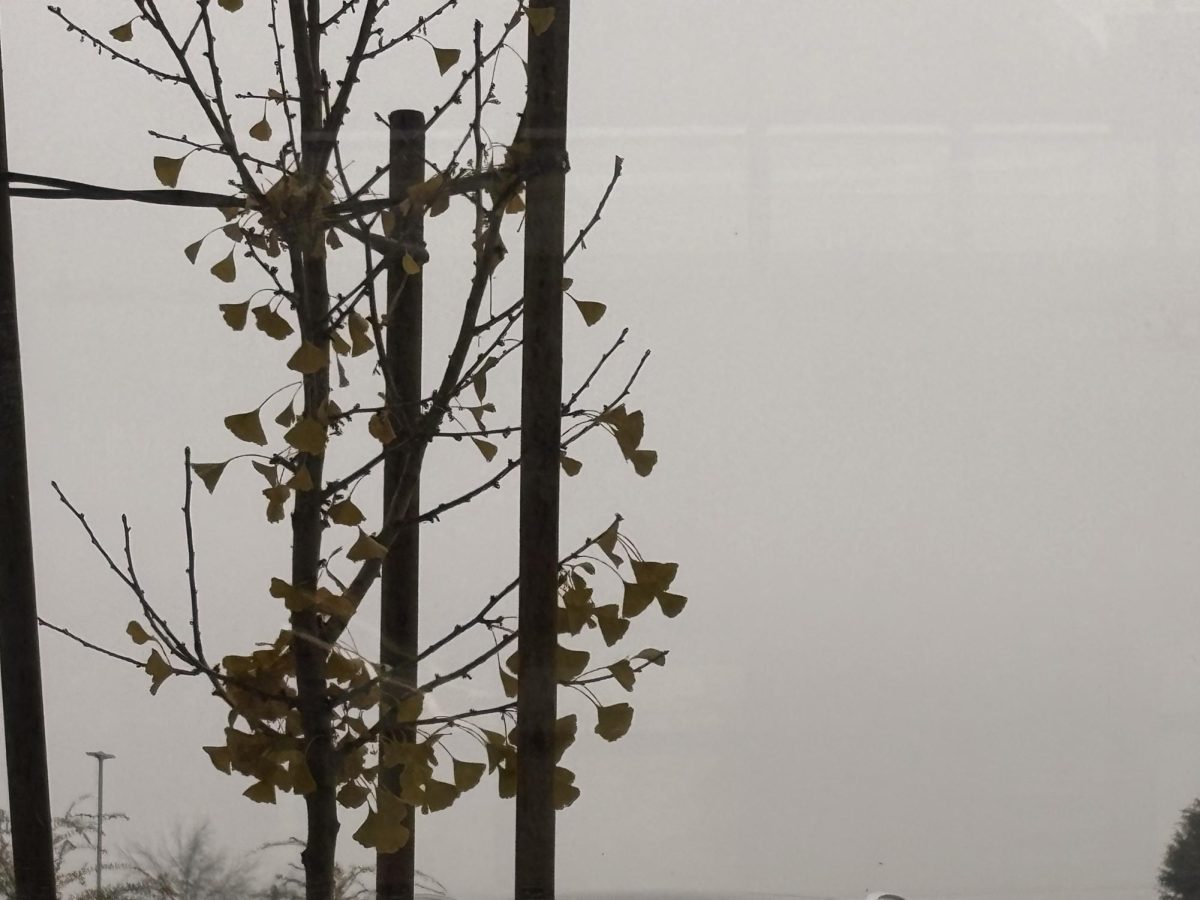
As of late November 2025, just after the sudden hits of rainfall that we’ve been receiving here in California, more specifically, the Central Valley, the fog started coming in. But, where exactly did it come from? Most of the time, the people in the Central Valley expect a day or two of fog. However, up until this point, we’ve seen days of fog and small glimpses of sunlight here in Dinuba. So, what’s with the gloomy, cloudy days that we continue to see?
Scientifically, it’s called Tule Fog. It gets its name from the Tule Reeds in our region’s historical wetlands, and is a form of radiation fog. Tule Fog is like a blanket, but it specifically affects the Central Valley (San Joaquin & Sacramento valleys) and occurs only during late fall and winter.
There are different dangers associated with Tule Fog, including how thick it can be. For instance, on Friday, December 12th, there was a report on CBS News of a multi-crash car pile-up between Livermore and Brentwood, which left the captain of the Contra Costa County Fire Protection District injured when struck by a vehicle during this heavy fog. Apart from the extremely low and horrible visibility that it can cause, Tule Fog, and even fog in general, also worsens the air quality due to the amount of airborne pollutants that it traps, and the agricultural side. It can benefit fruit and nut trees, but if the fog were to lessen, it would evidently lead to poor yields/low-quality crops.
According to NASA, Tule Fog forms when moist ground, usually after rainfall, cools rapidly. This causes water vapor to condense into tiny droplets around pollutants, creating a thick, cloudy blanket trapped by temperature inversion. Tule Fog is unique to the Central Valley because California’s mountains surround it, creating a barrier that funnels cold air and traps the fog within it.
During this time, it is advised that both students and parents of children at Dinuba Unified follow proper safety precautions on foggy days. If there is a chance of a foggy day schedule, will likely be imposed after 6 a.m. When searching for whether or not you or your child’s school is under a foggy day order, please turn to TV channels 18, 24, 30, or 47. Radio stations KISS 93.7, KMJ AM 580, or KMJ FM 105.9 will also have this information available. If unable to listen to the radio or in a rush out the door, the foggy day phone line is available at 559-595-7282 and select prompt 1. Resources like ParentSquare, Instagram, and Facebook (School pages) are available too. Valley PBS also has a source where anyone can go to check if a Foggy Day is scheduled within the area. It updates daily, and it just takes a refresh of a page to see if changes have been made to the schools undergoing a schedule change.
On foggy days, all schools within Dinuba Unified will be on an hour delay. Buses will also be under this hour delay to protect the safety of students, drivers, and other people who are on the road. It is deeply advised that students are not to be dropped off at school earlier than 30 minutes before the delayed start time.
Earlier this month, Dinuba unexpectedly went under a two-hour delay due to the fog. On Friday, January 16, a message was sent out to Dinuba Unified parents that schools and buses were on a two-hour delay due to the thickness and the risk of dangers the fog was causing. For Dinuba High School students, school started at 10 O’clock and classes were only 38 minutes compared to the usual 58 minutes.
While most people may have many things to say about the fog, English Teacher Mrs. Enns, who has been with Dinuba Unified for 25 years, stated, “Never in the twenty-five years that I have been here have I experienced a foggy delay past the usual one hour. This year was my first one.”
An unexpected delay going past what is usual can be a little difficult. For Dinuba High School’s Principal, Mr. Popp, who has been here for nearly seven years now, had plenty to share about this rare occurrence. “That was the first time we had a two-hour delay/foggy day schedule in anybody’s memory. Even in our district, some of our district leaders who’ve been here a long time, even to the best of their recollection, we’ve never had a two-hour foggy delay schedule.”
“It’s not the first time we’ve had foggy day schedules. It was the first time, I think we’ve had a two hour delay. So I’d say we prepared as best we can.” Popp added. “The morning of, our transportation department is the first one to report it. They’re making a decision based on the fog in the area if the buses are safe to roll out. It’s usually between 4:30 and 5:30 AM. They’re having to make that call.”
The fog, wherever a person is in the Central Valley, is especially bad. Out in the countryside, where there are hardly any streetlights or lights from houses, factories, or stores, it can be especially hard to see where a person may be driving. It is advised that, when driving, eyes stay on the road, phones are kept in a nearby pocket for emergencies, hands remain on the wheel, and no distractions are made to whoever may be driving.

kathy I • Feb 13, 2026 at 4:35 pm
I liked how the author added the point of view from a teacher and our principal.To show us how we have never gotten this amount of fog were we had to be delayed for two hours.
Christofer J • Feb 13, 2026 at 3:26 pm
I like how the author included a picture of the fog back in December. I found this interesting because it includes the reaction of Mrs. Enns, saying this is the first time in 25 years that we have had a 2-hour delay.