![The new leadership at Dinuba Intermediate School (from left to right): Jessica Juarez (soon to be Jessica Chavez) - Learning Director, Rosa Carreon - Counselor, Hilda Osorio - Counselor, Gloria Valencia - Principal, and Micah Hiett - Learning Director. [Photo courtesy of Gloria Valencia]](https://emperorgrapevine.com/wp-content/uploads/2026/05/682710295_18557787079066828_5882969838312812831_n-900x1200.jpg)



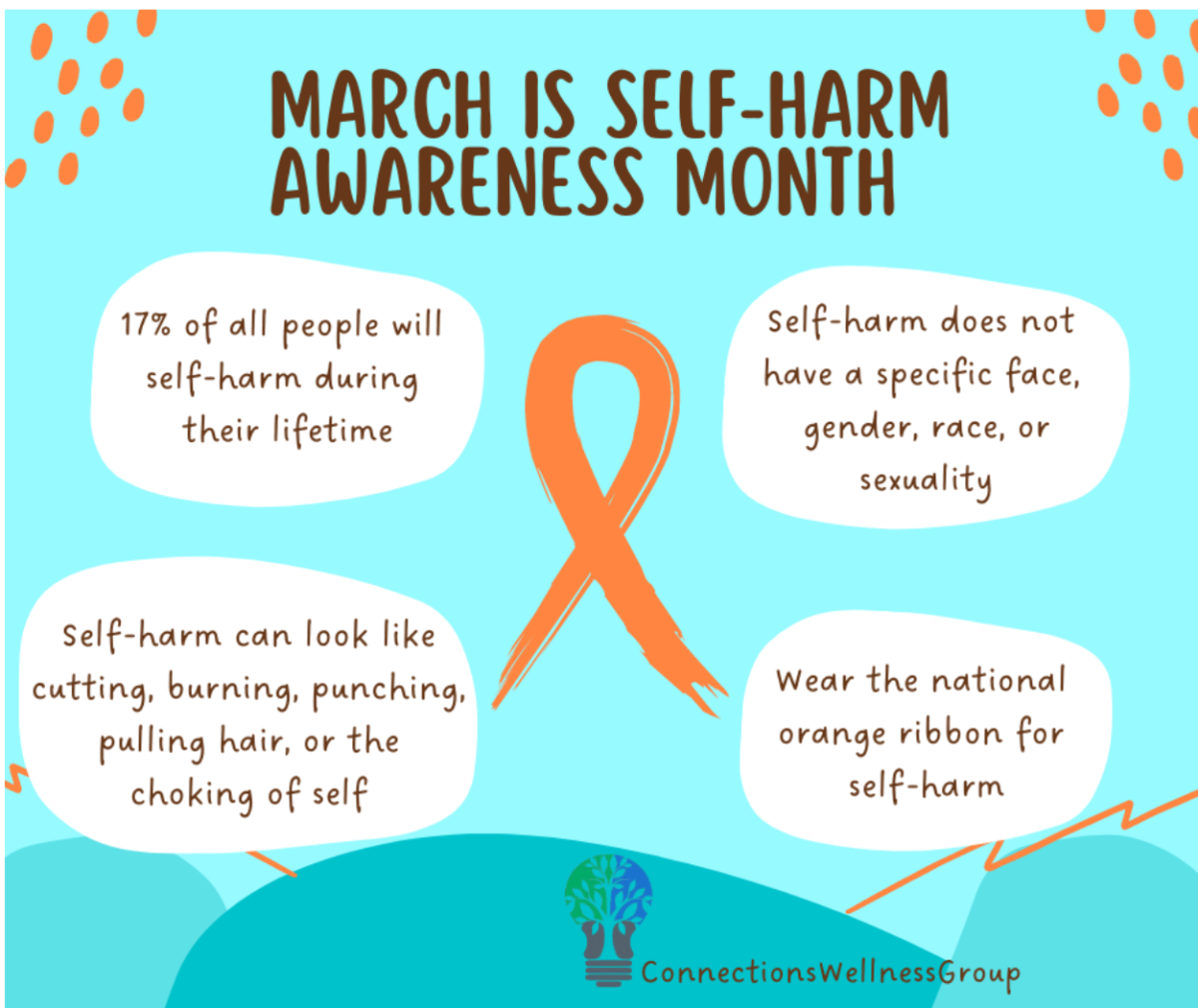
This month, March, is Self-Harm Awareness Month. Self-harm, also known as self-injury or self-mutilation, is the act of hurting yourself on purpose in an attempt to cope with emotional distress. Self-harm is not a cry for attention and not something that someone should just ignore. The purpose of this article and of Self-Harm Awareness month is to educate people on the subject, to help recognize the warning signs, the types of self-harm people engage in, and how to help someone who is self-harming. While self-harm doesn’t always mean someone is suicidal, it does increase the chance of someone becoming suicidal.
The most common form of self-harm is cutting. The cuts might be in patterns or just in lines. Sometimes they even carve letters or shapes on their skin. Other forms are burning themselves, scratching, and self-hitting. The most targeted places for self-harm are the arms, legs, and torso since they are easier to hide. Cutting, for example, can be hidden easily with sleeves, but if they’re closer to the wrist, they can be hidden with bracelets.
There are some warning signs to be aware of. One of the more noticeable signs is seeing someone constantly wearing long-sleeved clothing or multiple layers, even when it’s hot outside. Another sign is if someone is very withdrawn. They might start to distance themselves and stop hanging around friends so often. They might have random scars or new cuts. People do get hurt, but if it’s often that a scar or cut shows up and they use some kind of excuse that doesn’t seem right, or maybe the same excuse over and over, that’s a warning sign. There are also some things that might influence someone into self harming. It might be trauma, family issues, social isolation, or confusion about personal identity. If someone has a friend who self-harms, it can encourage them to do it, too.
Loneliness can be a reason they self-harm. Stress can be a reason, too. It gives a form of release, even though they regret it later. It’s a distraction for some people. Others use it to get a sense of control over their lives or selves. Some feel they deserve it. They may be in extreme emotional pain, and they don’t know how to deal with those emotions. While to others it seems ridiculous, to the person doing it, it’s a temporary solution, so it happens often. Sometimes people do it even when they’re not hurting because it becomes a habit, but regardless of whether it’s a release of stress or boredom, it still needs to be addressed.
If you know anyone self-harming or even if you suspect it, it’s best to tell someone you can trust, like a counselor or teacher, who you know will help them. Anyone who does self-harm should find help, but people who do self-harm can find other healthy ways to cope, like looking up grounding techniques or other ways to release the stress. Even when feeling the need to self-harm, it’s best to wait ten minutes to let the emotions pass.
There are different ways to show your support to Self Harm Awareness. While green brings awareness to depression and yellow represents suicide awareness, orange is the ribbon that represents self-harm. Another way to show support is through what’s called the Butterfly Project. This is when you draw a butterfly on your wrist to represent life.
Self-harm is a serious issue that isn’t talked about as often as it should. This month, take the time to educate yourself about the signs and what to do so you can help anyone who might need it.